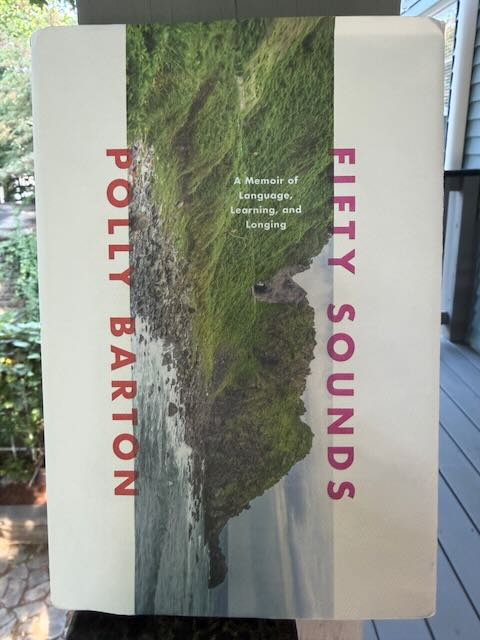
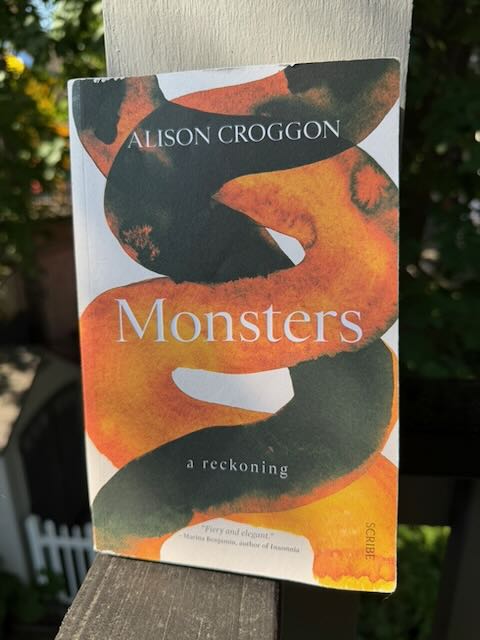
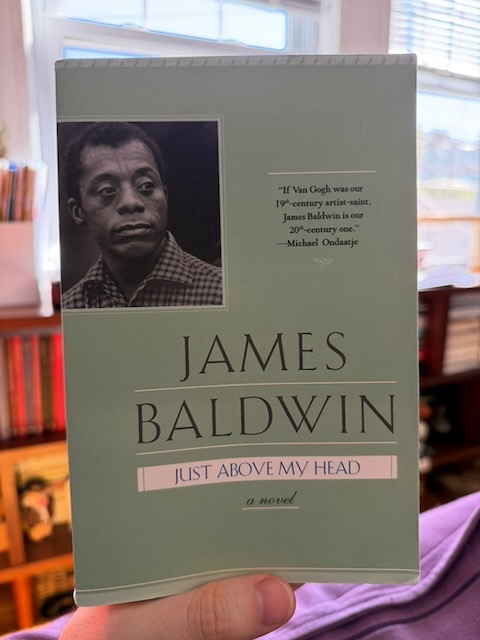
In June, I went on a tear reading a decent handful of shorter books after the longer and challenging reads in April/May. I captured most of them as I went along on The Story Graph, which I had been introduced to years ago via the Lothians.
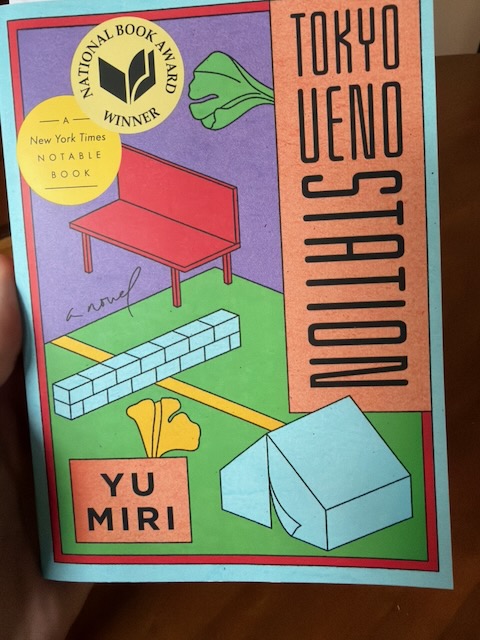
First up, Tokyo Ueno Station by Yu Miri. This book came to me via a recommendation through Instagram or The Good Place (not sure which). I guess I stuck in the "greater emotional impact than expected" books after completing Just Above My Head. In this tight, sparse, philosophical book, we are introduced to Kazu, father, laborer, as he reflects on his life that spanned the modern Japanese era from 1933 to 2006. Drifting in and out of time and personal history, Kazu recounts his life as a migrant laborer, whether working at sea, building stadiums for the Olympics, or moving earth and materials by hand, and consequently spending years away from his family. As he is beset by the worst luck, he cannot make it out of poverty and a hardscrabble life.
The book portrays the plight of Japan's homeless population with care and precision, as Kazu — in his later years — escapes guilt, night terrors, and more to join the ranks of the homeless around Ueno Park. Reading this book after listening to Eight Million Ways to Happiness by Hiroko Yoda helped me understand better the complex, multi-religious aspect of Japanese culture, especially around death and funerary ritual. (I must insist that this book be listened to! Hiroko Yoda gives such a searing, funny, and loving reading to her book.)
I didn't say much about the storyline — it's ultimately a story of isolation, hardship, trying to do the right thing (but not achieving the outcome you expected), and criticism of Japan's societal flaws. Published in the wake of the Fukushima Daiichi nuclear disaster related to the 2011 tsunami, there's a potency here that I wish I could read in the native Japanese.
In Elisa Shua Dusapin's debut novel, Winter in Sokcho, the French-Korean protagonist is working at a declining, seaside guest house in Sokcho (northeastern South Korea, within 20 miles of the demilitarized zone) through the winter. A guest arrives from France to find a new story and illustrate it for his newest graphic novel.
Sokcho is a cold, unforgiving place in the winter. The characters navigate icy courtyards, nurse frozen fingertips, and cultural chasms. The protagonist finds herself drawn to the graphic novelist, attempting to introduce him to what she believes is Sokcho's essence (a conflicted place, not yet healed from war, and marked by decline and despair). They circle around each other, attempting to connect and often finding a frisson of attraction.
I read this book in a day. It's very tight. The themes are potent (ranging from isolation to body dysmorphia to beauty culture). The author develops the characters beautifully and one is left almost wistful at the end.
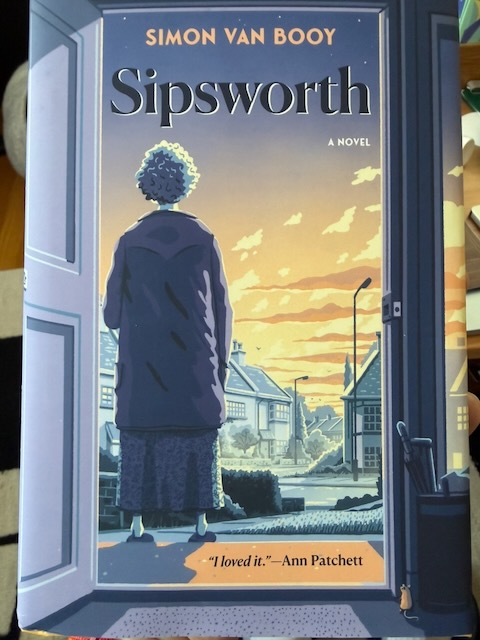
Sipsworth – Simon Van Booy
The prior two (Winter in Sokcho, Tokyo Ueno Station) had lonely characters, earlier in their life and after their life. "Sipsworth" also has a lonely main character. Helen Cartwright has moved back to her home town in England after thirty years away in Australia. Now in her eighties, her social circle is non-existent. Her days are simple: a slow ping-pong between bedroom, kitchen, and the living room where classic movies and modern news-noise emit from her television. Her trips to the grocery store (a long walk away) are crowned with a Bakewell tart, her one guilty pleasure.
Her routines and her isolation are disrupted one evening after she rescues some boxes and toys contained in a fish tank discarded by a neighbor. Over the following two weeks, Helen's world grows in leaps and bounds as she finds a new motivation beyond ticking down the life clock day-by-day.
The theme of finding community is very resonant for me. Helen actively avoids building relationships in her new-old town. She's fiercely independent and has had sufficient hurt in her life that she aims to protect herself with a shell. She turns to others when she's in actual need (and even then she's careful to portray it as a last resort) and finds that the humanity inherent in connection with others overrides her self-protection mechanism. Moving to a new place is hard. Rebuilding (or building) a fabric of connections with neighbors takes time and effort (and focus). I've talked with friends and family who give a range of 1.5 to 5 years to build that sense of connection and "I belong here" that truly feels real.
Published by Godine, a Boston-based publisher that I've respected for nearly three decades, this book is so British, precious, and joyous. It reinforces the importance of grace, second chances, and being open to friendship. Very lovely!
The English Understand Wool – Helen DeWitt
No picture for this book, as the cover is besmirched by a library tag that precisely covers the title…
The shortest book of the prior year… Maybe 70-ish pages of humor, snark, and quite unsubtle criticism of the publishing industry. Marguerite, 17 years old and seemingly abandoned by her over-the-top mother and contained father, sets off to write down her story for eventual publication. But she and her editor do not see eye-to-eye on how to take advantage of the press-and-social-media swirl that surrounds her current situation.
I picked up this book at my local library (West Branch of the Somerville Public Library) after chatting with one of the librarians about how featured books are selected. This one was not one of her selections, but I picked it up nonetheless. It was a total antidote to the other recent reads, even though the main character is also alone! DeWitt writes with panache and verve and I felt a great sense of joy reading of Marguerite's way of seeing the world (and her upbringing).
Glorious Exploits – Ferdia Lennon
This book came to be as a recommendation by one of my professors and friend Josephine Wolff. We were catching up and comparing summer reads. I love getting book ideas from friends and acquaintances because I learn more about the person and their interests (and I get to leverage the taste of people I trust).
Set in 412 BC on the island of Sicily, "Glorious Exploits" is a LOT of story. Lampo is a ex-potter, living at home with his mom, and he and his friend Gelon are unemployed. It's in the time of the Peloponnesian War and the Athenians who attacked Sicily were roundly defeated and (due to lack of space) imprisoned in the quarries. Somehow, out of this backdrop, Lampo and Gelon become co-directors of two plays (Euripides’ Medea and one other) by cajoling, the help of a producer, and the compelled participation of a handful of the Athenian prisoners.
I was about halfway through reading the book and complained how unsympathetic of a character Lampo is. I couldn't put the book down, though, because the characterization of everyone else (from children to set makers to buskers on the street) was just so, so good.
Great book. Standout debut novel by Ferdia, with a distinctive voice that weaves together contemporary speech and deeply historical references.
Disclosure: This post contains a affiliate links. I am an affiliate of Bookshop.org and I will earn a commission if you click through and make a purchase.